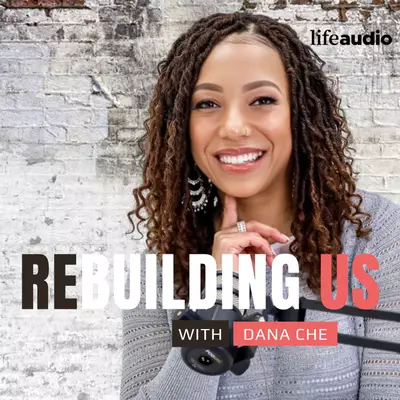


Ever wish there was an "easy" button for marriage? Or that you just had someone who understands the struggle?Rebuilding Us is a top-rated marriage podcast to help you restore intimacy, rebuild trust, and renew hope in your marriage. Join marriage coach Dana Che, who's been married to her hubby, Shaun, for 25 years as she guides couples on the journey toward restoration and connection.
Each episode includes real-life stories, practical strategies, and faith-filled insights to help you reignite love, deepen commitment, and create a thriving, joy-filled relationship. Say goodbye to Christian clichés—Dana’s relatable, no-nonsense approach (with a touch of humor!) will keep you coming back week after week.
Whether you’re healing from infidelity, seeking stronger communication, or simply longing for a closer bond, this podcast equips you with the tools and encouragement to rebuild not just your relationship but yourself.
Let the rebuild begin!
**New episodes drop every Tuesday and Friday. Subscribe now and take the first step toward your best marriage yet.
Overcoming Living with an Emotionally Absent Spouse - with Beatriz Vargas Do you know what it’s like to feel emotionally disconnected from your spouse because he/she is emotionally absent? The pain of that kind of disconnection is real, and it’s far too common. Joining us on this episode is Beatriz Vargas, host of The Grace-Fueled Wife Podcast, who shares the story of how her husband walked out on their marriage after being emotionally disconnected and how their marriage was restored afterward. What Defines an Emotionally Absent Spouse? What actually defines an emotionally absent spouse? In Beatriz’s case, her husband had all but checked out on the marriage. They were living in the same house, sleeping in the same bed, but were totally disconnected. Other disconnected marriages might involve the majority of the communication centering around the logistics of the marriage but lacking intimacy in the marriage. What defines an emotionally distant marriage to you? Change Can Cause Disconnection We all know change is important to a healthy marriage, but sometimes when one spouse changes too quickly or too drastically, it can cause disconnection in the marriage. Say one spouse loses an incredible amount of weight and quite literally become a new person. If their spouse isn’t 100 percent on board with this change, it can cause emotional distance and reveal hidden jealousies, fears, and insecurities. In Beatriz’s case, she talks about a time when she began to grow spiritually. Her husband didn’t grow at the same pace as she did, so she stepped in and decided to “hook him up” with some Christian men she thought could help him. That backfired, and her husband seemed to withdraw all the more. I had a similar experience with Shaun. You’ll have to listen to the episode to hear that story, but suffice it to say we probably shouldn’t make “playdates” for our spouses . . . especially when they are already emotionally disconnected. Be sure to listen to the full episode and be encouraged that even if there is emotional distance in your marriage, you can overcome! Links Mentioned in this Episode: The Grace-Fueled Wife Podcast How Connected of a Partner Are You? Take the Free Quiz! SUBSCRIBE | SHARE | RATE | COMMENT To ensure you never miss an episode, be sure to subscribe on Apple Podcasts, Google Play, Spotify, Stitcher, iHeart Radio, or wherever you listen to podcasts. Remember, sharing is caring! So, share these episodes with your friends and family via email or social media. Support the show: https://danache.com/donations/support-the-show/ Discover more Christian podcasts at lifeaudio.com and inquire about advertising opportunities at lifeaudio.com/contact-us.
She Deserves Better: Overcoming Toxic Teachings About Sex - with Sheila Gregoire Did you grow up believing what you now realize was toxic teaching on sex? Maybe your church, youth group, or family told you that as a girl you were somehow responsible for the lust of men. Yep. We’re going there. Joining us on today’s episode is popular author and speaker, Sheila Gregoire, who co-wrote the book She Deserves Better. Sheila and I talk about some of the toxic teachings on sex that the evangelical church (and other entities) promoted. Some of these teachings include things like, “Boys will be boys,” and “Girls are a stumbling block for men,” which in a sense is teaching men that they are not responsible for their own lust, but girls are. We also talk about how parents, moms especially, can shift the conversation from blaming young women for the sexual advances and inappropriateness of others. Toxic Teaching on Sex Can Be Triggering As you listen, you may be triggered by some of the toxic teaching on sex, especially if you were hurt by adults you trusted. This podcast is not meant to stir up those feelings, but it is meant to be a breath of fresh air that we no longer have to repeat these teachings to our daughters (or sons!). She deserves better, and so do you. It’s time we start telling the truth about modesty, purity, lust, and sin. It’s time we put the responsibility back on those in whom it belongs. It’s time we start living in the freedom that Christ gives and not allowing ourselves to be “under a yoke of bondage” (Galatians 5:1). Does this mean we should throw modesty and purity out of the window? Absolutely not. It means that we learn to have the right conversations and we teach a balanced, biblical, and honest view of sexuality and its expressions. Be sure to listen to the full episode and be ready to rethink how you’ve believed or how you believe. Links Mentioned in this Episode Register for the Thrive Marriage Mastermind Get Sheila’s Book: She Deserves Better Listen to Sheila’s Podcast Episode 24: Rethinking Intimacy: Rethinking Sex with Sheila Gregoire SUBSCRIBE | SHARE | RATE | COMMENT To ensure you never miss an episode, be sure to subscribe on Apple Podcasts, Google Play, Spotify, Stitcher, iHeart Radio, or wherever you listen to podcasts. Remember, sharing is caring! So, share these episodes with your friends and family via email or social media. Support the show: https://danache.com/donations/support-the-show/ Discover more Christian podcasts at lifeaudio.com and inquire about advertising opportunities at lifeaudio.com/contact-us.
Overcoming Unrealistic Expectations in Marriage In this episode, we discuss the unrealistic expectations that people have in their marriages. You should have expectations in relationships, but it is important to learn how to manage and overcome unrealistic expectations. You've likely heard, "No expectations, no disappointments," but I think that's a terrible way to live in a marriage. What are your expectations? What are you looking for? We will explore where these expectations come from and whether they are realistic or not. Also, we'll talk about the importance of communicating your expectations to your partner. Unrealistic vs Reasonable Expectations We'll start by discussing the difference between unrealistic and reasonable expectations. Often, people have expectations that are unrealistic, and that leads to disappointment and frustration. For example, expecting your spouse to be your best friend or provide a beautiful home may be reasonable but is it a realistic expectation for him/her? It's important to examine where these expectations come from and whether they are truly important to you or not. Where Do Expectations Come From? Next, we'll explore where these expectations come from. Expectations can come from a variety of sources such as family of origin, religious beliefs, media, culture, personal desires, and other people's expectations. We'll take a closer look at the expectations that are rooted in religious beliefs or cultural norms and whether they are realistic or not. Again, what might be realistic for one spouse may be unrealistic for another. ALSO LISTEN TO: Setting Realistic Expectations in Your Marriage Communicating Your Expectations In this segment, we'll discuss the importance of communicating your expectations to your spouse. Often, people have unspoken expectations, assuming their partner should know what they want. However, unspoken expectations can lead to disappointment and frustration. I'll provide some tips on how to effectively communicate your expectations and ensure that both partners are on the same page. 5 Common Unrealistic Expectations I share about five unrealistic expectations that people often have in their marriages. These include expecting your spouse not to change, thinking you can change your spouse, expecting your spouse to make you happy, assuming your spouse should know what you're thinking, and expecting your spouse to be like you. How can spouses overcome these unrealistic expectations in their marriage? We'll discuss why these expectations are unrealistic and how to reframe them to create more realistic expectations. Finally, I share several solutions to overcoming unrealistic expectation in your marriage and how your marriage can benefit from proper communication, Remember, unspoken expectations can lead to unmet desires, which leads to unnecessary disappointment. Links Mentioned in this Episode: Sign up for our FREE Thrive Marriage Mastermind Workshop! How to Create a Vision for Your Marriage SUBSCRIBE | SHARE | RATE | COMMENT To ensure you never miss an episode, be sure to subscribe on Apple Podcasts, Google Play, Spotify, Stitcher, iHeart Radio, or wherever you listen to podcasts. Remember, sharing is caring! So, share these episodes with your friends and family via email or social media.Support the show: https://danache.com/donations/support-the-show/ Discover more Christian podcasts at lifeaudio.com and inquire about advertising opportunities at lifeaudio.com/contact-us.
Overcoming Separation, Infidelity, & Dysfunction in Marriage - with Joseph & Madelyn Stallings Welcome to this episode of our podcast where we're joined by Joseph and Madelyn Stallings, who have graciously agreed to share their journey through infidelity, separation, and marital dysfunction with us today. Joseph and Madelyn have known each other since childhood, and on today's show, they talk about their journey towards a more healthy and thriving marriage, despite the numerous hurdles they've faced along the way. The Importance of Premarital Counseling We start by discussing how they met and their premarital counseling experience. Like Shaun and me, the Stallings have known each other since childhood. Joseph’s parents did their premarital counseling, but he doesn't recommend this. Neither do I, because couples tend to not be forthcoming when a family member (especially parents) are facilitating their pre-marital counseling. ALSO SEE: Why Should I Get Premarital Counseling? We delve deeper into the importance of premarital counseling and how it can help couples overcome childhood wounds and trauma that can seep into their marriage. An Unexpected Result of their Separation The Stallings experienced several separations in their marriage: some lasting for just a few months, and the longest over a year. Then, quite unexpectedly, Madelyn gets pregnant. She shares her experience of becoming pregnant with someone else's child while she and Joseph were separated, and how they worked through the emotions of it all. Only by God’s grace were they able to reconcile and work through the pain of that choice. Disconnection Leaves You Vulnerable to Infidelity We talk about the importance of staying connected and avoiding disconnection, which really makes your marriage vulnerable to infidelity. As Joseph puts it, "You can't let your emotions drive, but you can't put them in the back trunk either.” Basically, don’t allow your emotions to run your relationship, but withholding how you’re truly feeling only leads to disconnection in your marriage. After their last separation, things began to take a turn for the worst again, and this time it was Joseph who was unfaithful. Joseph shares his story of having an affair and the steps they took to heal and move forward. We discuss the importance of understanding the real source of pain and how it can help couples to stop hurting each other and to find the real source of their healing. Through their journey, Joseph and Madelyn have learned the importance of honesty, transparency, forgiveness, and communication. They remind us that marriages can truly endure more than we imagine, but through God’s grace, forgiveness, and a lot of “heart work,” we can make them work. Thank you for tuning in to this episode, and we hope you find it insightful and helpful in your own journey towards a healthy and thriving marriage. SUBSCRIBE | SHARE | RATE | COMMENT To ensure you never miss an episode, be sure to subscribe on Apple Podcasts, Google Play, Spotify, Stitcher, iHeart Radio, or wherever you listen to podcasts. Remember, sharing is caring! So, share these episodes with your friends and family via email or social media.Support the show: https://danache.com/donations/support-the-show/ Discover more Christian podcasts at lifeaudio.com and inquire about advertising opportunities at lifeaudio.com/contact-us.
Overcoming Fear in Marriage Introduction: Welcome to this week's episode of our podcast, where we explore the topic of fear and how it affects marriages. Fear is a natural reaction to the unknown, but it can also be debilitating and prevent us from fully experiencing intimacy in marriage. Today we'll discuss how fear can be the root of all intimacy problems in marriage and how to overcome it. Segment 1: Fear - Fear is not all bad. It can be a warning sign that something is wrong, and it can motivate us to take action. However, fear can also immobilize us and prevent us from taking risks or trying new things in our marriage. We need to learn to distinguish between healthy and unhealthy fear and understand how to respond appropriately. Segment 2: Courage - One of the best definitions I've heard for courage is choosing to act in spite of fear. Courage isn't the absence of fear. If you never feel fear, there is no need for courage, actually. We need to learn to face our fears and push through them. It takes courage to be vulnerable in a relationship, to risk being hurt, and to trust our spouse. Segment 3: There are different fears in relationships, including the fear of being hurt, the fear of rejection, the fear of being made a fool of, the fear of your spouse cheating on you, the fear of losing yourself in your marriage, the fear of losing control, and the fear of being fully known, amongst others. These fears will lead to intimacy problems in marriage if not addressed. Segment 4: How to Get Rid of Fear: To overcome fear, we need to acknowledge that it's there and not hide or deny it. We can ask ourselves, "What's the worst that can happen?" Then, prepare for the worst-case scenario. We can also "trust in the Lord" (Proverbs 3:5-6) and renew our minds with His word, worship, and our words. Conclusion: Fear can be the root of all intimacy problems in marriage. But by acknowledging our fears, facing them with courage, and trusting in the Lord, we can overcome them and experience deeper intimacy in our relationships. As Psalm 34:4-5 says, "I sought the Lord, and he answered me; he delivered me from all my fears. Those who look to him are radiant; their faces are never covered with shame." Links Mentioned in this Episode: Ep. 14 - How These Hidden Fears are Ruining Your Relationships Get Your FREE e-book: 5 Relationship Mistakes that are Wrecking Your Life: danache.com/relationshipmistakes SUBSCRIBE | SHARE | RATE | COMMENT To ensure you never miss an episode, be sure to subscribe on Apple Podcasts, Google Play, Spotify, Stitcher, iHeart Radio, or wherever you listen to podcasts. Remember, sharing is caring! So, share these episodes with your friends and family via email or social media.Support the show: https://danache.com/donations/support-the-show/ Discover more Christian podcasts at lifeaudio.com and inquire about advertising opportunities at lifeaudio.com/contact-us.
Overcoming Financial Infidelity in Marriage Financial problems is the #2 reason for divorce in our country. So it makes sense that we tackle the issue of financial infidelity in marriage. This goes deeper than just having money mindset challenges or spouses disagreeing on how money is spent. Financial infidelity speaks to the deception that a couple may find themselves facing when keeping secrets or telling lies about how money is spent in the marriage. Joining us for this conversation is the founder of Pacific Capital, Chad Willardson, who coaches high earning entrepreneurs to create more wealth and focus on wealth planning in their lives and businesses. Chad has been married for over 22 years, and is the father of five children. He has been featured on Inc., Forbes, The Wall Street Journal, and more. He has written the books Stress Free Money and Smart Not Spoiled. I loved hearing Chad’s story of how he grew up to appreciate living a life of generosity, which, I believe is foundational to the success he’s experiencing today. We discuss how married couples can and should be honest about their spending practices, how to challenge their limiting beliefs about money, and where to start to recover if finances have taken a toll on the marriage. Chad shares his best tips and resources to help couples get out of debt, create wealth, and live a life they love. To learn more about Chad, visit https://pacificcapital.com. Links Mentioned in this Episode: Follow Chad on Linked In Finding Financial Peace in Your Marriage - with Austin Black SUBSCRIBE | SHARE | RATE | COMMENT To ensure you never miss an episode, be sure to subscribe on Apple Podcasts, Google Play, Spotify, Stitcher, iHeart Radio, or wherever you listen to podcasts. Remember, sharing is caring! So, share these episodes with your friends and family via email or social media. Support the show: https://danache.com/donations/support-the-show/ Discover more Christian podcasts at lifeaudio.com and inquire about advertising opportunities at lifeaudio.com/contact-us.
Finding Joy in the Midst of Pain - with Nicole Jacobsmeyer Today we are so blessed to have with us one of our new podcast friends. Her name is Nicole Jacobsmeyer. Nicole is a speaker and author and a mom and she is lovely. I loved this conversation that we had today. We talked a lot about joy and what does it mean to have joy? Because so oftentimes y’all, we go through things in our lives and we get knocked down to get back up, maybe in your relationship. You felt like your relationship or your marriage was totally destroyed or you've been knocked down and you're really struggling trying to get back up, getting back in the game of life and going on with what you know that your purpose is. Nicole has written a book called Take Back Your Joy and I love the subtitle, it's “fighting for purpose when life is more than you can handle.” I don't know about you, but I have been through some seasons of my life where I have felt like it is just too much. Like it's just too much Lord. I don’t know why you think I can handle this. Like Lord I didn't sign up for the strongest warrior battle plan, okay? So, what does it look like to have joy? What does it look like to have peace? What does it look like to know who and whose you are and the midst of going through really, really traumatic times in your life? Here are some snippets of our conversation: A Broken Christian Home Nicole: I grew up in a Christian home. I had a wonderful upbringing and then it wasn't until my late teens and early 20s that I just had a lot of awful things happen to me and surrounding me. And one of those was my dad shared that he was living a double life. And so this unfaithfulness our family was very devastating. I had an abusive verbally and mentally abusive volleyball coach, which was really detrimental to my faith and my character. And then shortly after all of this, I had a horrific experience and was actually raped. And this culmination of pain made me really doubt God's consider a joy when trials come my way. And when I read specific scriptures, it didn't feel true. And so, overall these years, then just a few years ago, I was diagnosed with cancer, we lost a baby, we moved across the country, I was single parenting. My husband was in the medical field and he was just so slammed at work. And I just found myself asking those same questions that I did, you know, prior. And so this idea of joy and suffering and becoming who God wants me to be really made me understand that it was through the pain that he started to use these different qualities in me now, which I mean, I wouldn't wish this upon anyone, but I'm very thankful that God is actually doing what he said he will do, which is producing us character and hope and endurance and joy because of the pain that we face like it says in Romans. So it's been a journey. And a hard one. Dana Che: Wow, it's been a journey for you. So your parents become kind of that that physical representation of who God is to you, so I can understand like when that is broken, it does break the trust that we have with God, like if these people that say that they love me unconditionally who are right here break my trust, then why should I believe that a God who I can't see and who I don't really know for sure is there that he won't break my trust. When you were vin college, where were you in your faith journey? Developing a Real Relationship with God Nicole: Ever since I committed my life to Christ, you know and said this “sinner's prayer," at just such a young age I think our entire life is growing in a relationship of Christ and so I didn't experience a lot of hardships growing up and I while I would like to say that I had a firm foundation It wasn't tested, you know It wasn't tested through the fire to come out more purified living in like the head knowledge and truly loving the Lord, truly wanting to read my Bible and do the right thing and surround myself with good people and go to Wednesday night Bible studies and prayer groups. I wanted to do those things, but I don't think that it's like there's a different aspect into your relationship with Christ and trusting him when pain and trials really do come. ALSO READ: Purpose in Pain That experience (the assault) really made me go deep into the word. I've trying to figure out what does this mean because now I no longer just read verses and just think, oh yeah, that's true. It's like, I have to know that I know that I know that, you know, God is good and why and looking back and seeing what he's done for me. And really, maybe I missed the point of the entirety of the gospel at that point in my life. Maybe I missed the sacrifice that he has, you know, given us. And I maybe overlooked that and It was just while I would like to say I was very strong in my faith, I think that I was just so broken after that. That is hard to say exactly where I was. Yeah. So how did you reconcile that whole question? Because that's a real question like God, if you are good and so many people ask this question, right? It's like God, if you are good, why would you allow this to happen? If your word says and we can go in scripture and find all these scriptures about, you know, him being our hiding place and no evil will come to us and all of that. That's right. God, if your word says all of that, how did you reconcile him allowing this thing to happen to you? Finding Joy in Pain by Asking the Right Questions Dana Che: I love so much of what you're saying Nicole. I think about a quote Graham Cook says and he says, “instead of asking God why, ask him what? Like ask him what or who do you want to be to me in this?” That changed how I go through trials in my own life. You know, somebody I think it was Joyce Meyer that said, “You know, instead of saying, why me ask why not you?” We are not innocuous to the pain of this world, even though we are believers, even though we know the Lord, it doesn't protect us from everything. But what it does do, I think, is it gives us hope. that, you know, like Paul says, "We don't grieve as those who don't have hope.” We can actually go through things in life and not be completely devastated and depressed to the point that we can't function. Nicole: I learned 10 years prior to this that I didn't have anything to offer and yet God still saw me in that moment. And I was like, I have to start like writing this out. But as I started processing and writing, it's like this thread of joy, of understanding true joy, and that assurance that God is with me regardless of what I go through, all the highs, all the lows, I can have this firm foundation and nothing can shake me. That seemed like I wanted that. I wanted that. I mean, and it's all throughout the word. And so I was like, what is this I needed? Much into this idea of joy and suffering and what I've been told versus what I'm living out versus what's in the word versus what is being spoken in books and in pastors and all this stuff. And I was like, I've got to find this for myself. So it was a long process. Dana Che: Oh my gosh. You know, it's joy is like one of those words that has been so butchered in our culture where people think joy is happiness. That's right. So it's hard to be like, well, how can you go through something like that and be happy And that's not what you're saying at all. Like that's not the biblical definition of joy. So if you had to describe or define joy to someone, how would you define that? The Difference Between Happiness and Joy Nicole: I first would say what happiness is, it's because that would help us to know what joy isn't. Because I think we just are so, like you said, we're just so quick to say that. And happiness is just fleeting. It's just an emotion, you know, it's just fleeting. Depending on anything, you know, we can be happy one moment, moment, it just comes and goes, but joy, it stays. It has that staying power because Christ is our joy. He is our strength. He is our portion. He is our help. He is our peace. He is all of these things and he's also our joy. And the Holy Spirit, you know, when we're filled with the Holy Spirit, we've got those fruits and one of them is joy. And so I can't, I can't reach for it. I can't strive for it. I can't, you know, have an experience and hope that me joy, it is that we have a relationship with Christ and that is our joy. And so I feel like it's been this back and forth with me of thinking, okay, now this must be joy. Or this must be joy because I'm happy. But then you think of the word, it's like, are you kidding me? Do you think God would tell us to be happy in all circumstances and be it's like going back to his character of who we know him to be and who we and what we read in the word of who we are at the foot of the cross. Dana Che: Yeah. You know, happiness depends on our happenings, right? So it's like this external circumstantial dependent place that, you know, if life is going well, then I'm happy. But, you know, if my boyfriend breaks up with me, my husband cheats on me, my bank account is drained, then I'm depressed. And that's right. And still have joy, but I hear you saying is that you can still have joy. and the midst of all of those things that are happening to you because you're solid in who you are in Christ and who you know them to be. And so it gives us like this, it's almost weirdly synonymous with like peace, you know, like we have peace, even though we might not be, we might, you can be crying and have joy. You can be grieving and still know that like the joy of the Lord is your strength. You can still know who God is and appreciate what he's capable of. are not full of happiness and smiles and giggles. Nicole: Exactly. Oh, you nailed that. And I just, I think writing all of this out and processing has been so helpful for me. And I just pray it's helpful for other people. take back your joy, fighting for purpose when life is more than you can handle. Because I don't ever want to tell anybody that God will never give them more than they can handle. Because that is not the truth. I know people mean well, and I know they're just trying to be kind in the moment and don't know what else to say. But I kind of just walk through all these different things that I've been through with the pain and the suffering and the trauma and how God pulled me out. each of those trenches and how we can take these steps and these disciplines with us wherever we go and be able to live that out. Links Mentioned in this Episode: Take Back Your Joy by Nicole Jacobsmeyer. Download Your Free Audio: 7 Secrets to a Happy Marriage Support the show: https://danache.com/donations/support-the-show/ Discover more Christian podcasts at lifeaudio.com and inquire about advertising opportunities at lifeaudio.com/contact-us.
How to Know When It’s Time to Divorce In this episode, we are discussing the difficult topic of divorce. Although I am pro-marriage through and through, there are times, sadly, when divorce may need to occur: abuse, adultery, abandonment, and addiction. While divorce is never easy, sometimes it is the only option left for individuals to protect themselves and their families. We explore each of these situations and provide information on how to recognize when it may be time to consider divorce. When to Divorce: Abuse Abuse can come in many forms, including physical, emotional, and verbal. It is important to recognize the signs of abuse and know when it is time to seek help. I do not believe a marriage can be saved when there is physical abuse present. I always advise individuals to seek help and safety if they are being physically abused. The National Domestic Violence Hotline can be reached 24 hours a day at 800-799-7233. We also address the common misconceptions surrounding abuse and why leaving an abusive relationship is often the best course of action. Emotional abuse is different. I believe couples need to seek therapeutic help to determine if mental illness is a factor or if a spouse is simply being mean or a jerk. This is tricky, because all abuse is harmful, but not all cases of emotional verbal abuse warrant divorce. Should We Divorce Because of Adultery Adultery can be devastating to a marriage and can leave individuals feeling hurt, rejected, and betrayed. No matter why the infidelity happened, the betrayed spouse needs to know it was not his/her fault. My marriage story includes our journey from adultery, and in no way was it easy. However, just because a marriage has gone through adultery doesn’t mean it is irretrievably broken. Your marriage can heal after adultery. In the Bible, the prophet Malachi issues a strong warning to the men to not treat their wives “treacherously” because God hates divorce (Malachi 2:14-16). Too many have focused on the “God hates divorce” part without considering these verses in their proper context. Divorce, in that time, was “cruelty” to women (verse 16). Women in those days had no way to provide or protect themselves. And since God loves his daughters, he hates divorce. Plus, it violates covenant, and God is serious about covenant. Is Abandonment a Reason to Divorce When a spouse walks out on the marriage, it can be devastating. Abandonment isn’t only a painful experience for the spouse who stayed but also any children that might be present. This leads to feelings of loneliness, rejection, and betrayal for those left behind. One of the best Scriptures that pertain to this is I Corinthians 7:15: “But if the husband or wife who isn’t a believer insists on leaving, let them go. In such cases the believing husband or wife is no longer bound to the other, for God has called you to live in peace.” If a spouse walks out on you, you are not required to go chase down behind them or wait for years for him/her to return. Addiction Ruins Families and May Be a Cause to Divorce Addiction can have a profound impact on a marriage and can cause significant stress and strain on a relationship. Most people agree that addiction is a disease and usually required professional help to overcome. Addiction is messy, and often non-addicted spouses feel guilty for filing for divorce. While I do not counsel couples to divorce, I do advise them to see carefully weigh the positives and negatives in their decision to stay with an addicted partner. There must be firm boundaries set in cases where addiction is wrecking a marriage. ALSO READ: How to Live with An Addicted Spouse Divorce is never an easy decision, but sometimes it is necessary to protect oneself and one's family. In this episode, we explored four common situations that can lead to divorce: abuse, adultery, abandonment, and addiction. It is important to remember that seeking help and support is essential during this difficult time. I believe there needs to be a lot of support and wise counsel before one makes the difficult decision to divorce. Links Mentioned In this Episode Episode 6: On the Brink of Divorce to a Different Choice - with Javier and Christina Llerna Episode 83: A Marriage Restored After Divorce, Drugs, & Deconstruction - with Chris & Steph Teague SUBSCRIBE | SHARE | RATE | COMMENT To ensure you never miss an episode, be sure to subscribe on Apple Podcasts, Google Play, Spotify, Stitcher, iHeart Radio, or wherever you listen to podcasts. Remember, sharing is caring! So, share these episodes with your friends and family via email or social media.Support the show: https://danache.com/donations/support-the-show/ Discover more Christian podcasts at lifeaudio.com and inquire about advertising opportunities at lifeaudio.com/contact-us.
Feeling, Dealing, and Healing from Rejection - with Nicole Langman Welcome to this episode of our podcast where we will be discussing the topic of how to deal with and heal from rejection. Rejection is a common experience that everyone goes through at some point in their life. It can be a painful and difficult experience to deal with, especially when you’re rejected by a spouse or someone you love. It’s important to understand that rejection is not a reflection of our self-worth. In this episode, I talk with clinical therapist, Nicole Langman, who wrote the book You are Wanted: Reclaiming the Truth of Who You Are. We explore different ways to cope with rejection and how to heal from it. Understanding Rejection Let’s start off by exploring what rejection is and how it affects us. Rejection is a normal part of life, and it can come in many forms such as rejection from a job, rejection in a relationship, or rejection from a friend. It’s important to understand that rejection can be painful, but it doesn’t define who we are as a person. Nicole and I also discuss how rejection can affect our mental health and the importance of taking care of ourselves during these times. Coping with Rejection Nicole shares the painful story of how her husband walked out on her after more than twenty years of marriage. That rejection did a number on her soul, until she remembered who she was. It’s important to know that rejection can cause soul wounds, triggering abandonment or loss feelings we may have suffered from in other relationships. This is where narrative therapy really helped her and some of the people Nicole has worked with around this issue. In this segment, we also discuss different coping mechanisms for dealing with rejection. This is where knowing your identity in Christ is crucial. When you know who He says you are, no matter how someone has rejected you or made you feel, you can heal more quickly from their actions. Nicole and I also talk about the importance of acknowledging our feelings and not suppressing them, as well as the importance of seeking support from those who love us. Some other self-care practices like exercise, meditating on God’s word, getting out of your head, and even journaling can help us cope with rejection. ALSO LISTEN TO: How Apathy and a Lack of Interest is Silently Killing Your Relationship Healing from Rejection Lastly, we will talk about the process of healing from rejection. Self-reflection is important here and we can use the experience of being rejected as a learning opportunity. We also talk about how forgiveness is an important part of the healing process, both for ourselves and for the person who rejected us. Finally, we will touch on how to move forward from rejection and finding the courage to love and trust again. Rejection is a difficult experience to go through, but it’s important to understand that it’s not a reflection on who we are. By acknowledging our feelings, seeking support, and engaging in the healing process, we can cope with rejection in a healthy way. Through self-reflection, spiritual practices, and forgiveness, we can also heal from rejection and use the experience as an opportunity for growth. Remember, rejection may have hurt, but it doesn’t have to destroy you. With time and resilience, we can move forward and find true healing as we remember that God can use anything, even rejection, for our good and His glory. LINKS MENTIONED IN THIS EPISODE Nicole’s Langman's website Get Nicole's Book: You are Wanted SIMILAR PODCAST EPISODES ON REJECTION: Episode 122 SUBSCRIBE | SHARE | RATE | COMMENT To ensure you never miss an episode, be sure to subscribe on Apple Podcasts, Google Play, Spotify, Stitcher, iHeart Radio, or wherever you listen to podcasts. Remember, sharing is caring! So, share these episodes with your friends and family via email or social media. Support the show: https://danache.com/donations/support-the-show/ Discover more Christian podcasts at lifeaudio.com and inquire about advertising opportunities at lifeaudio.com/contact-us.
Black Marriage: Behind the Scenes (Black Love)- with Early and Cherese Jackson Black marriage, like any other type of marriage, is complex and multifaceted, evolving over time. Historically, black people in America have faced numerous challenges when it comes to love, dating, and marriage. My guests on today's podcast are Early and Cherese Jackson. Married for nearly fourteen years, the Jacksons discuss how an "independent black woman" and a confident, unintimidated black met, married, and are walking together in business and ministry. It's a behind the scenes look at a real marriage. A healthy marriage. An example of a good marriage. Emotional Support Truthfully, whether you're black or not, you need the emotional support of your spouse. Cherese discusses how she often needs her own space to create and be herself. Early, understanding his wife's temperament and needs has learned to adjust and give her the emotional support she desires even while not physically being in her presence. Parenting Dynamics When it comes to parenting, most couples will disagree on some levels. Usually, one parent is "softer" than the other, which causes one parent to be more of a disciplinarian. Couple that with a blended family, and you have a recipe for hurt feelings and disconnection. Or . . . you have an opportunity for true unity and compromise. Early and Cherese chose the latter, learning with a limp, as they blended their family together. From present-day systemic racism, black couples have had to navigate a society that often fails to value and support their relationships. Despite these challenges, black marriage has persisted, and in recent years, there has been a resurgence of interest in celebrating and elevating black love. That's the entire reason I did this #blacklove series on the show. Thank you for taking this journey with me and celebrating the stories of black love. LINKS MENTIONED IN THIS EPISODE Connect with Early and Cherese and New Direction Coaching Get Your Free 7 Secrets to a Healthy Marriage! SUBSCRIBE | SHARE | RATE | COMMENT To ensure you never miss an episode, be sure to subscribe on Apple Podcasts, Google Play, Spotify, Stitcher, iHeart Radio, or wherever you listen to podcasts. Remember, sharing is caring! So, share these episodes with your friends and family via email or social media.Support the show: https://danache.com/donations/support-the-show/ Discover more Christian podcasts at lifeaudio.com and inquire about advertising opportunities at lifeaudio.com/contact-us.
Dana Che is the founder of Thrive Relationships, where she serves as a marriage and relationship coach and host of the Rebuilding Us marriage podcast. She also serves as a preaching pastor at her church. Whether in the church or on her podcast, Dana's mission is singular: to help people rebuild their relationships through the grace and guidance of the Lord.
On Rebuilding Us, she is known for her graceful candor, humor, and her encouraging yet challenging advice. Dana holds a B.A. in communication from Regent University. She has a fierce passion for fashion and a fiercer passion for truth. She shares her life with Shaun, her loving husband of over twenty-five years, their four amazing children, and their “multi-cultural” dog in beautiful Virginia Beach, VA.